Nobody Wants to Visit Santa Cruz County? Not So Fast.
By MaryBeth McLaughlin
In real estate, we like to say it’s all about location. But every location has a backstory, and in Santa Cruz County that backstory often explains why things are the way they are today: why a parking lot sits where it does, why so much of our redwood land is protected, why a university sits on a hill above town.
I got a lesson in that this month from an unlikely source. YouTube served me a video titled Why Nobody Wants to Visit Santa Cruz Anymore.
Naturally, I clicked.
I expected the usual complaints — traffic, homelessness, expensive hotels, maybe a little nostalgia for the Santa Cruz of decades past. Instead, I fell down a Santa Cruz history rabbit hole.
I’ve lived and worked in Santa Cruz County for decades. I drive Highway 9 constantly. I hike our local trails. I play beach volleyball across the street from the Boardwalk. And yet, as I watched, I realized how much history I’ve been walking, hiking and driving past without really knowing the story underneath it.
Take the Boardwalk. Its roots stretch back to 1865, when John Leibrandt opened a public bathhouse near the mouth of the San Lorenzo River. Saltwater bathing was touted for its health benefits, and tourists began coming to Santa Cruz to experience the beach.
By 1903, entrepreneur Fred Swanton was behind the creation of Tent and Cottage City near the beach. Visitors could stay in simple wood-and-canvas accommodations, making it possible to turn a day at the beach into an affordable seaside vacation. If you’ve ever parked in the Boardwalk’s main parking lot, you’ve stood where Tent City once stood.
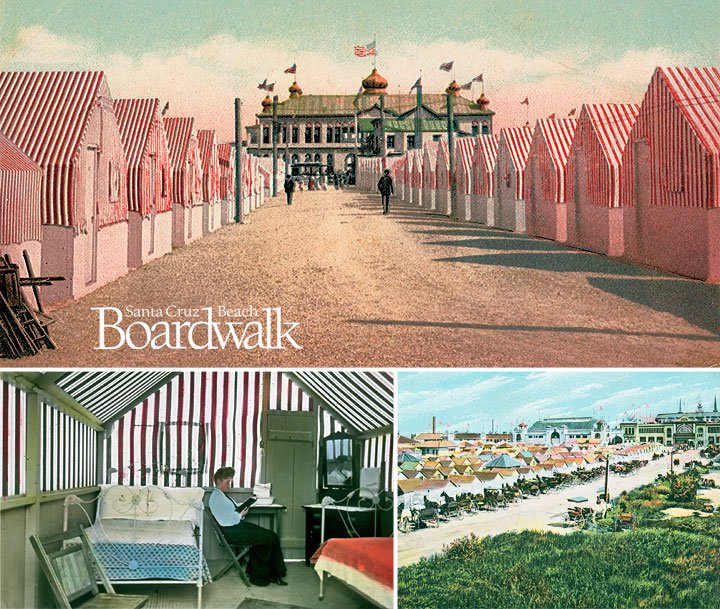
Tent City, circa 1903. Wood-and-canvas accommodations allowed early Santa Cruz visitors to extend their stay at the beach. Today, the site is the Boardwalk’s main parking lot. (memories.beachboardwalk.com/boardwalks-cottage-city)
The Boardwalk itself opened in 1907.
And then there is the carousel. The Looff Carousel arrived in 1911 and is still operating today, its hand-carved horses circling 115 years later. Its music comes from antique band organs, including a 342-pipe Ruth & Sohn organ built in 1894 that has played alongside the carousel since 1911. Think about that the next time you walk past it.
And you can simply walk past it, because more than a century after the Boardwalk opened, admission is still free. You can wander in from the beach, hear the carousel organ, watch the Giant Dipper rumble overhead and never buy a ticket. In an era when admission fees are commonplace at amusement parks, that feels pretty remarkable.
Follow Highway 9
The history gets even more interesting when you leave the beach and head up Highway 9.
Those stone lime kilns many of us have hiked past in the Fall Creek Unit of Henry Cowell Redwoods State Park are remnants of an industry that was once enormously important to Santa Cruz County. Limestone was heated in kilns for days to produce lime, an essential ingredient in mortar and plaster.
And what fueled those fires? Our redwoods.
Hundreds of thousands of cords of wood were burned over the years to keep the kilns blazing. California State Parks says that during the years of highest demand, nearly 80 percent of California’s lime came from Santa Cruz County.
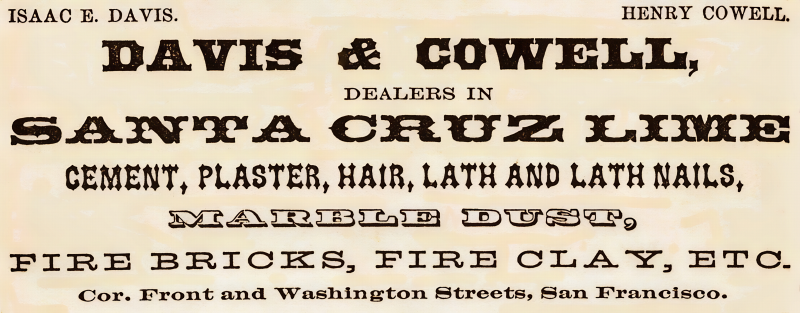
Henry Cowell bought into the local lime business in 1865 and eventually amassed extensive landholdings and lime operations. The lime produced here was shipped out to supply the building industry.
There is an extraordinary historical circle in that story.
Redwoods became fuel. Fuel produced lime. Lime helped build California. The industry helped create the Cowell fortune. And land connected to the Cowell legacy ultimately helped give us both protected redwood forest and UC Santa Cruz.
The forests that seem timeless to us today were once part of an industrial landscape.
So….Nobody wants to visit?
All of this brought me back to the provocative title that started me down this rabbit hole. Does nobody really want to visit Santa Cruz anymore? Apparently, somebody forgot to tell the visitors.
Preliminary 2026 tourism figures released by Visit Santa Cruz County tell a very different story. In June, hotel demand increased 4.4 percent over the previous year, with occupancy reaching 76.5 percent. Short-term rental demand increased 4 percent as well.
July remained strong, with hotel occupancy reaching 78.4 percent and short-term rental occupancy at 78.7 percent.
So people haven’t stopped coming to Santa Cruz. But Santa Cruz has changed. Of course it has. It has been changing for its entire history.
Railroads changed it. Automobiles changed it. Wars and earthquakes changed it. Silicon Valley changed it. Tourism changed it. Housing costs changed it. Fires, floods and changing industries have reshaped our communities again and again.
Perhaps that’s what fascinated me most about the video — not its conclusion, but the realization that there have been so many different versions of Santa Cruz. And yet, somehow, pieces of all of them remain.
I’ve looked toward that familiar Santa Cruz skyline countless times without thinking about everything underneath it.Now, when I look over there, I ponder that perhaps the question isn’t why nobody wants to visit Santa Cruz anymore.
Clearly, people do.
Maybe the more interesting question is how Santa Cruz keeps changing and somehow remains unmistakably Santa Cruz.
For those of us who live here, own property here, or dream of buying here, that’s worth remembering. Santa Cruz real estate has never been static. The land under our feet has been a bathhouse, a tent city, a lime operation, a timber supply and a university campus. Knowing that history doesn’t just make a hike more interesting. It’s a reminder that what makes a place valuable is rarely just the building. It’s everything underneath it.
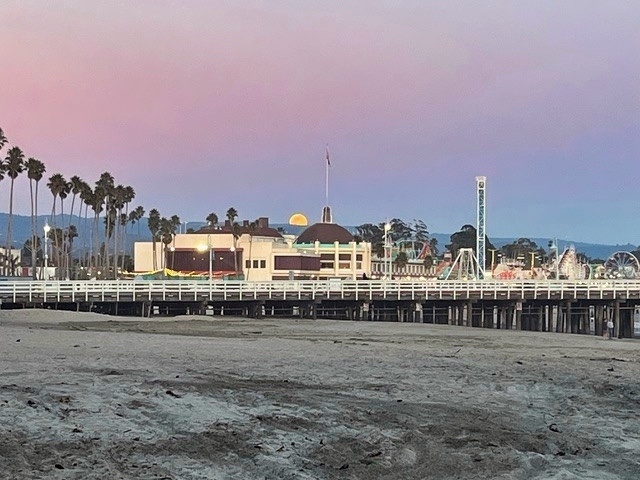
Featured photo at top of page by MaryBeth McLaughlin: The view toward the Santa Cruz Beach Boardwalk from the volleyball courts in front of the Dream Inn. A familiar skyline with more than a century of stories underneath it.
WANT TO GO DOWN THE RABBIT HOLE?
If this bit of Santa Cruz history intrigued you as much as it did me, here are some fun places to keep exploring:
The Video That Started It All
YouTube: Why Nobody Wants to Visit Santa Cruz Anymore
Boardwalk Tent City & Cottage City
See historic photographs of the wood-and-canvas accommodations where early Santa Cruz vacationers stayed.
memories.beachboardwalk.com/boardwalks-cottage-city
Santa Cruz Beach Boardwalk History
Explore the bathhouses, Boardwalk, Looff Carousel, Giant Dipper and more than a century of Santa Cruz beach history.
beachboardwalk.com/history
Santa Cruz Public Libraries Local History Collection
Browse historic photographs of the beachfront, Boardwalk, railroads and Santa Cruz through the years.
history.santacruzpl.org/omeka/collections
Henry Cowell Redwoods State Park
Explore the history and landscape of Henry Cowell and the Fall Creek Unit.
parks.ca.gov/?page_id=546
Have a story to share? The San Lorenzo Valley Post welcomes your Santa Cruz Mountains news, story ideas, photos, and letters. Send us an email.
Sign up for our newsletter to stay connected to news and events in the Santa Cruz Mountains.

The San Lorenzo Valley Post is your essential guide to life in the Santa Cruz Mountains. We're dedicated to delivering the latest news, events, and stories that matter to our community. From local government to schools, from environmental issues to the arts, we're committed to providing comprehensive and unbiased coverage. We believe in the power of community journalism and strive to be a platform for diverse voices.